

DIY Spinning Christmas Tree
Turn a battery, copper wire, and magnet into a simple motor to spin a tiny Christmas tree. Whirl through the physics of rotation and light as we decorate the holidays with a twist of science!

The Origins and Symbolism of the Christmas Tree

Photo credit: Dima Valkov on Pexels
Curious about where the iconic Christmas tree actually came from? Long ago, people decorated evergreens during the winter solstice, treating them as symbols of life in the year’s darkest stretch. In the 16th century, Germans began adorning Christmas trees, and Martin Luther , a German Theologian, was said to have added candles to reflect the glow of the stars. The tradition spread across Europe and gained even more attention in the 1800s when Queen Victoria and Prince Albertof the United Kingdom embraced it. German immigrants later carried the custom to America, where it steadily grew in popularity. By the late 19th century, Christmas trees were found in homes everywhere, gradually transforming with electric lights and ornaments.
A Christmas tree is a special symbol for celebrating Christmas, and it’s not just for Christians — it’s for anyone who enjoys the holiday spirit! The tree is usually decorated with lights, ornaments, and sometimes even candy. For many, it’s a time to spend with family, share gifts, and feel happy together. Today, it’s a symbol of joy, hope, and warmth. Whether you celebrate Christmas or not, the tree brings people together in a fun, festive way! It symbolizes joy, hope, and the spirit of the holiday season.
What Makes the Tree Spin?
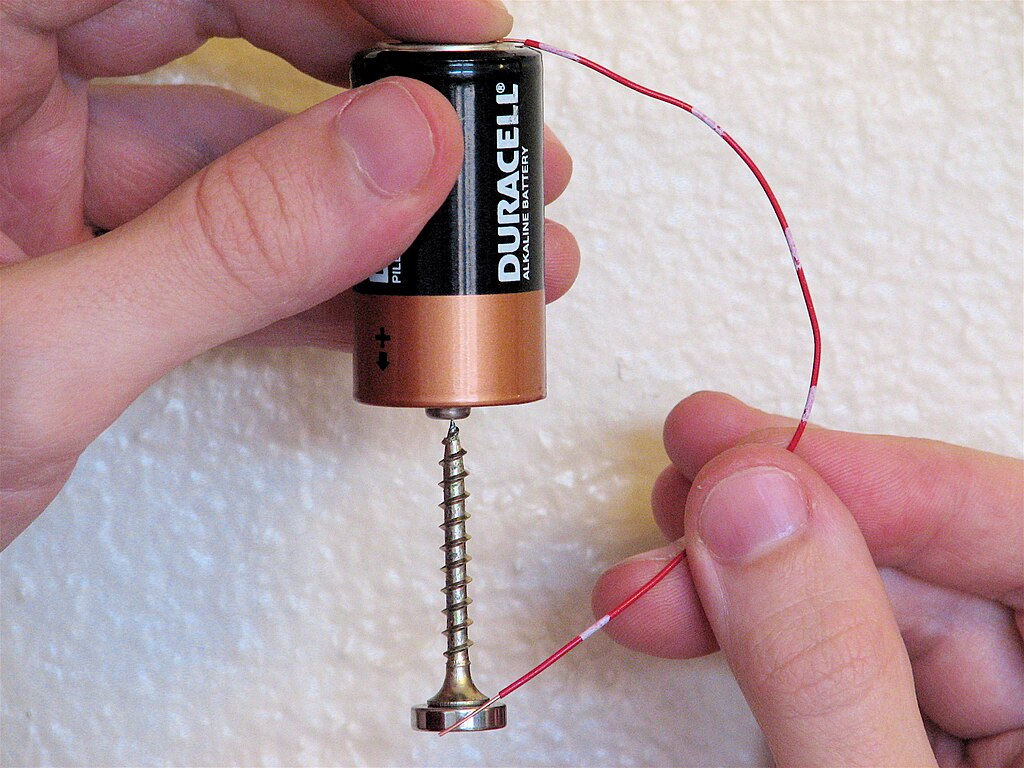
Photo Credit: Windell H. Oskay on Wikimedia Commons
Now let’s get back to making your very own Spinning Christmas Tree. How does it spin? That’s thanks to a homopolar motor! It’s one of the simplest motors you can make, using just a battery, a magnet, and a piece of copper wire. When you connect the wire so electricity flows from the battery and touches the magnet, the wire starts to spin. This happens because moving electricity creates a magnetic field, and the magnet pushes against it. This push is called the Lorentz Force, and it’s what makes the wire move. Since the battery sends power in only one direction, the wire always spins the same way. It’s a cool and fun way to see how electricity and magnetism can work together to create motion! (Watch how the homopolar motor spins here!)

Photo Credit: Maciej J. Mrowinski on Wikimedia Commons
So, what is a magnetic field? A magnetic field is an invisible force around a magnet that can pull or push certain objects, like iron or steel. If you’ve ever played with magnets and felt them stick together or push away from each other, that’s the magnetic field at work. Even electricity can make a magnetic field when it flows through wires. Earth has one too, which is why compasses always point north. Magnetic fields are all around us, helping things like compasses, motors, and even trains work. Pretty cool, right? (Click here to find out more about magnetic fields!)
The Need for Sustainability and Conservation

Photo credit: Hana Brannigan on Pexels
Batteries and wires can become electronic waste when we throw them away. Batteries have chemicals inside that can hurt the Earth if they leak into the ground or water. Wires are often made of metals or plastic, which are non-biodegradable and do not break down easily. If we toss them in the trash, they just sit in landfills and pollute the planet.
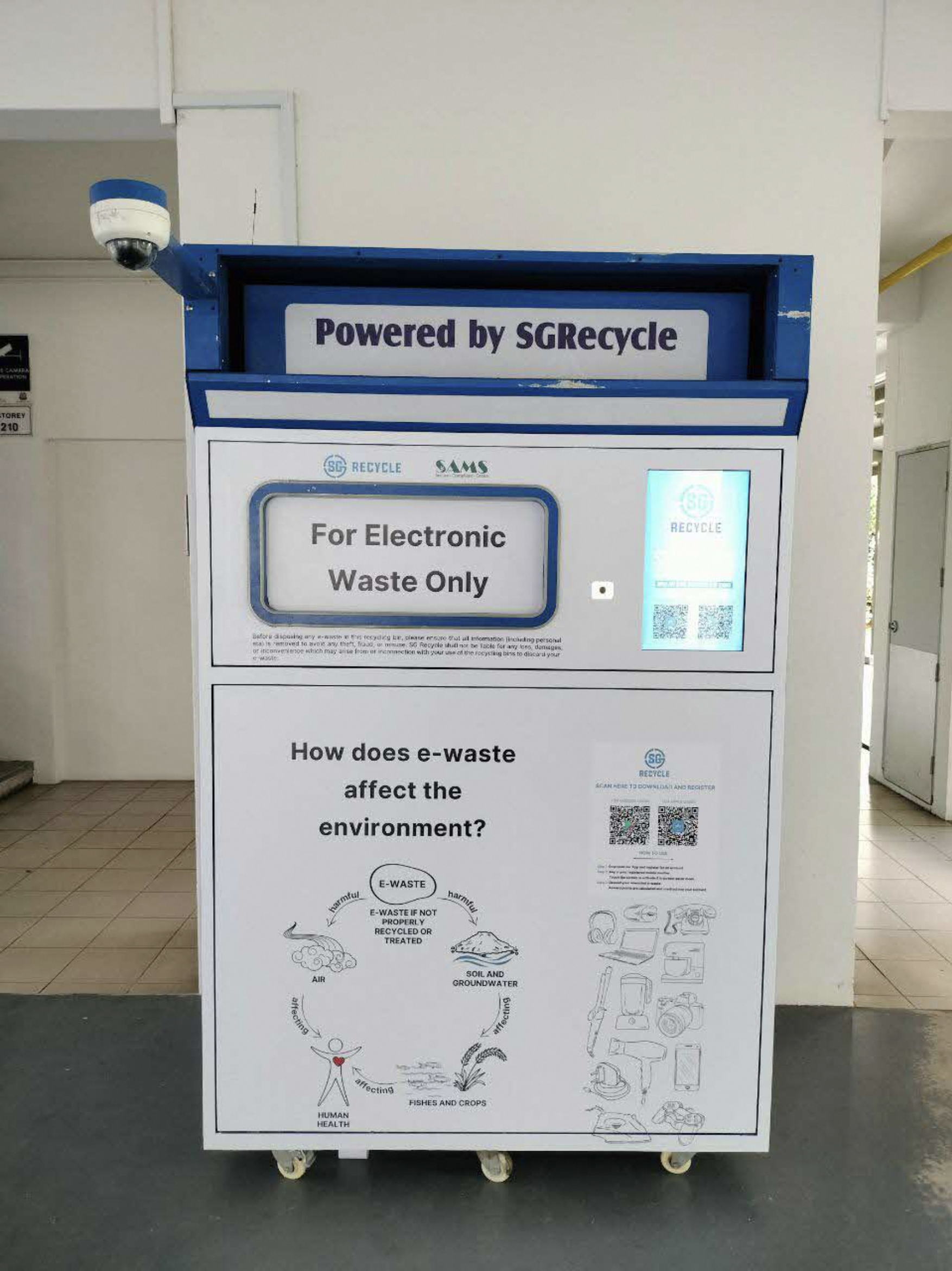
Photo credit: Benjamin Lim (Writer)
The good news is, we can recycle them! Recycling helps reuse the metal and keeps the dangerous stuff out of nature. So instead of throwing batteries and wires away, we should take them to special places that recycle electronics safely. The National Environment Agency (NEA) of Singapore has set up electronic waste bins in many areas accessible to people. ALBA E-Waste has also deployed more than 870 collection points, dedicated to collect a wide variety of e-Waste from batteries to consumer computers. (You can find out where to drop off your E-waste items at the bins provided by NEA here and by ALBA E-waste here.)
Of course, making this DIY Spinning Christmas Tree is a perfect way to upcycle! This simple DIY project demonstrates basic electromagnetic principles in a fun and decorative way, perfect for holiday science displays or teaching kids how electric motors work with everyday household items.
Interested to find out more cool Christmas activities at the Science Centre Singapore? Check out festive STEM programmes as part of Sci-sational Christmas this school holiday!
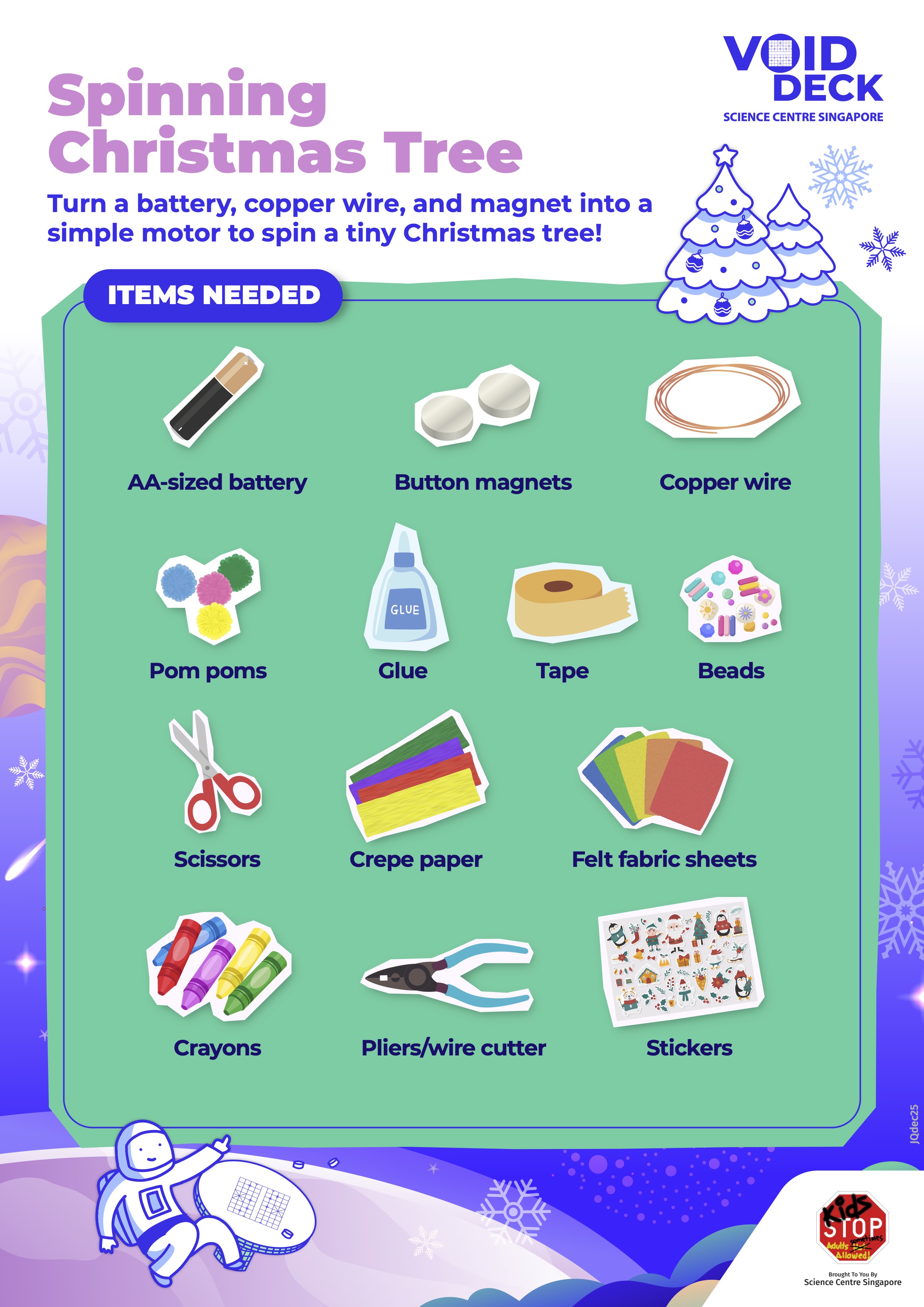
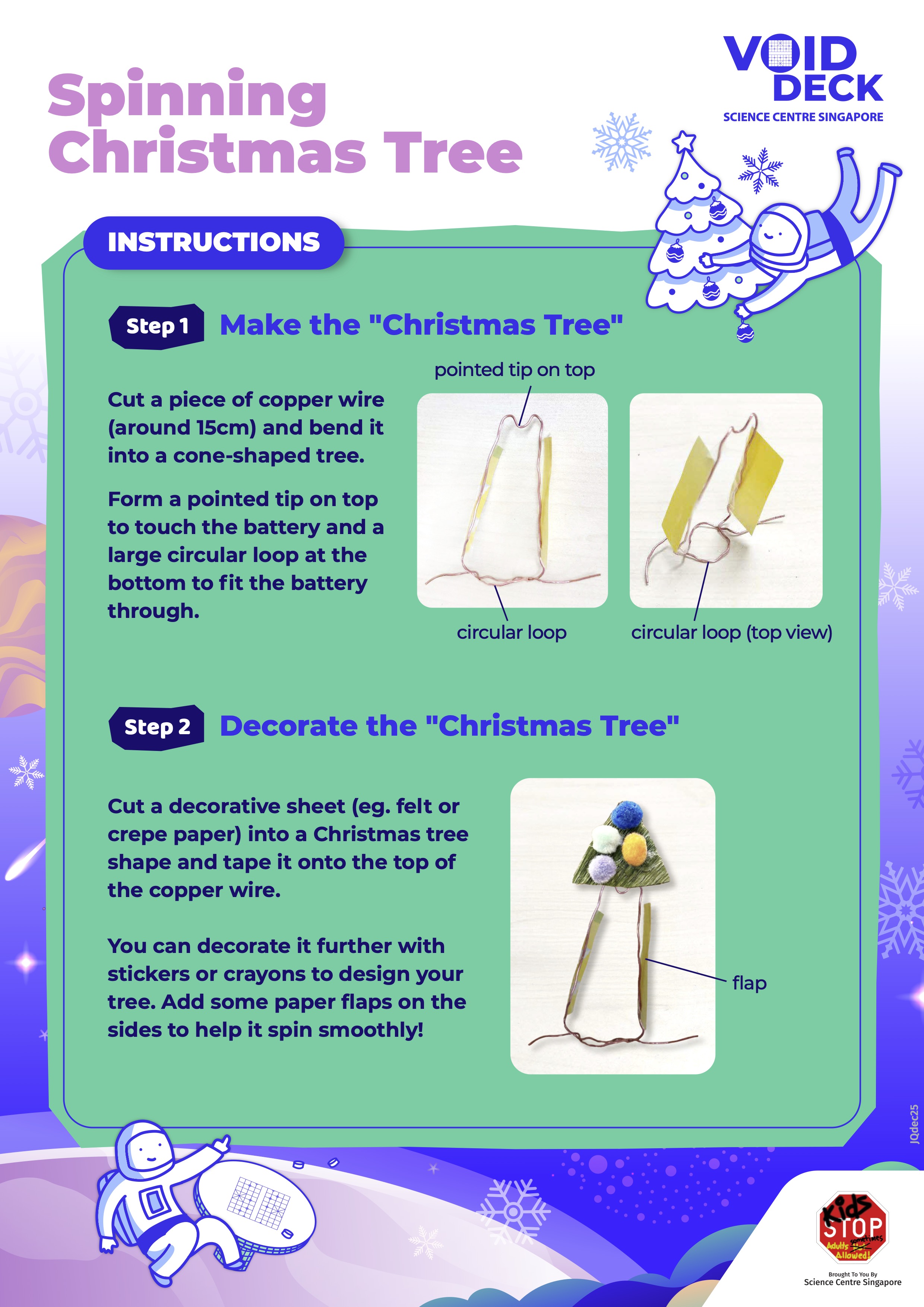
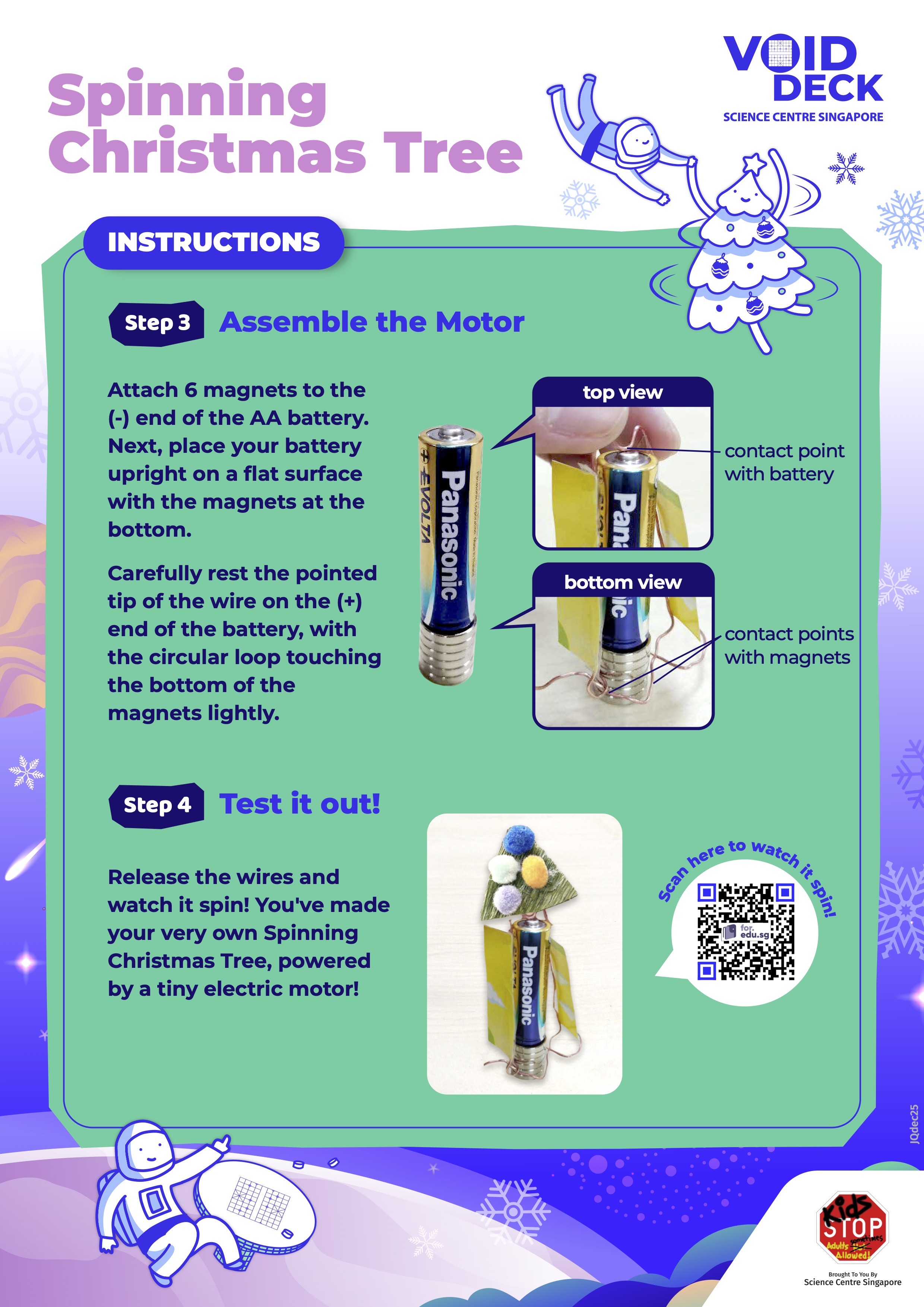
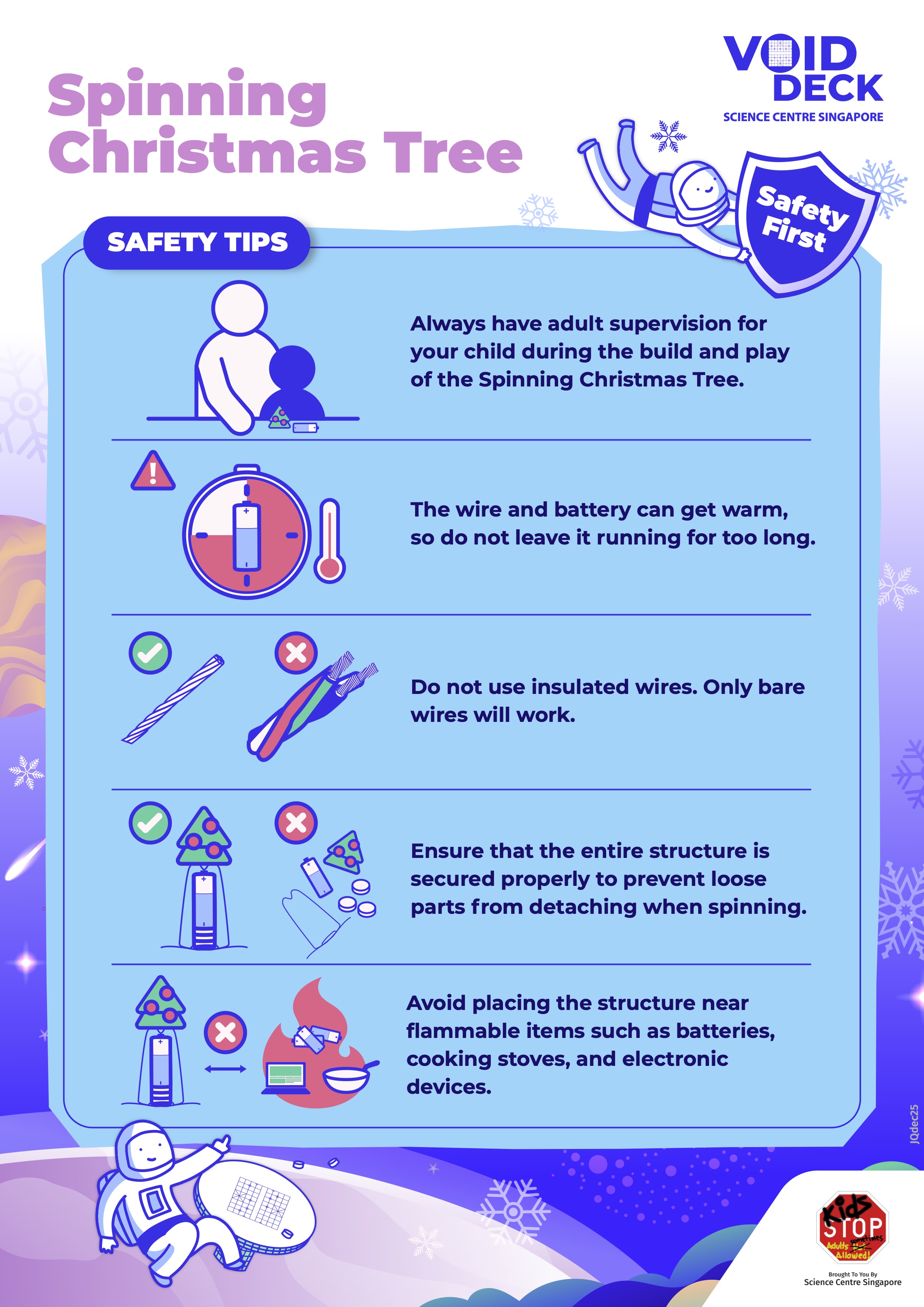
Click on the link below to download a printable guide.
Void Deck DIY Spinning Christmas Tree Activity Guide
Written by Benjamin Lim
Published 22 December 2025