

Rhythms of Hari Raya

Hari Raya Puasa, also known as Eid al-Fitr, celebrates the joyful end of Ramadan. During Ramadan, Muslim families fast from sunrise to sunset and gather each evening to break their fast together. It is also a time for reflection, prayer, and doing good deeds. When the month ends, families celebrate by asking for forgiveness, wearing new clothes, visiting loved ones, and enjoying special festive foods together.
In Singapore, Kampong Glam and Geylang Serai come alive with stunning light displays and colourful bazaars filled with traditional treats. Homes are adorned with colourful lights and tantalising aromas waft out of kitchens as numerous families prepare for their friends and family to join in the festive fun together.
The Heart of Malay Music: Traditional Drums

Photo credit: The Malay Heritage Foundation
For many generations, the beating of drums has formed the steady, energetic backbone of Hari Raya celebrations. Three special drums fill our neighbourhoods with joyful rhythms – the kompang, rebana, and gendang. Of the three, the kompang is perhaps the most recognisable drum; kompang ensembles are often seen performing in mosques around Singapore during Hari Raya.
The Science behind the Beat
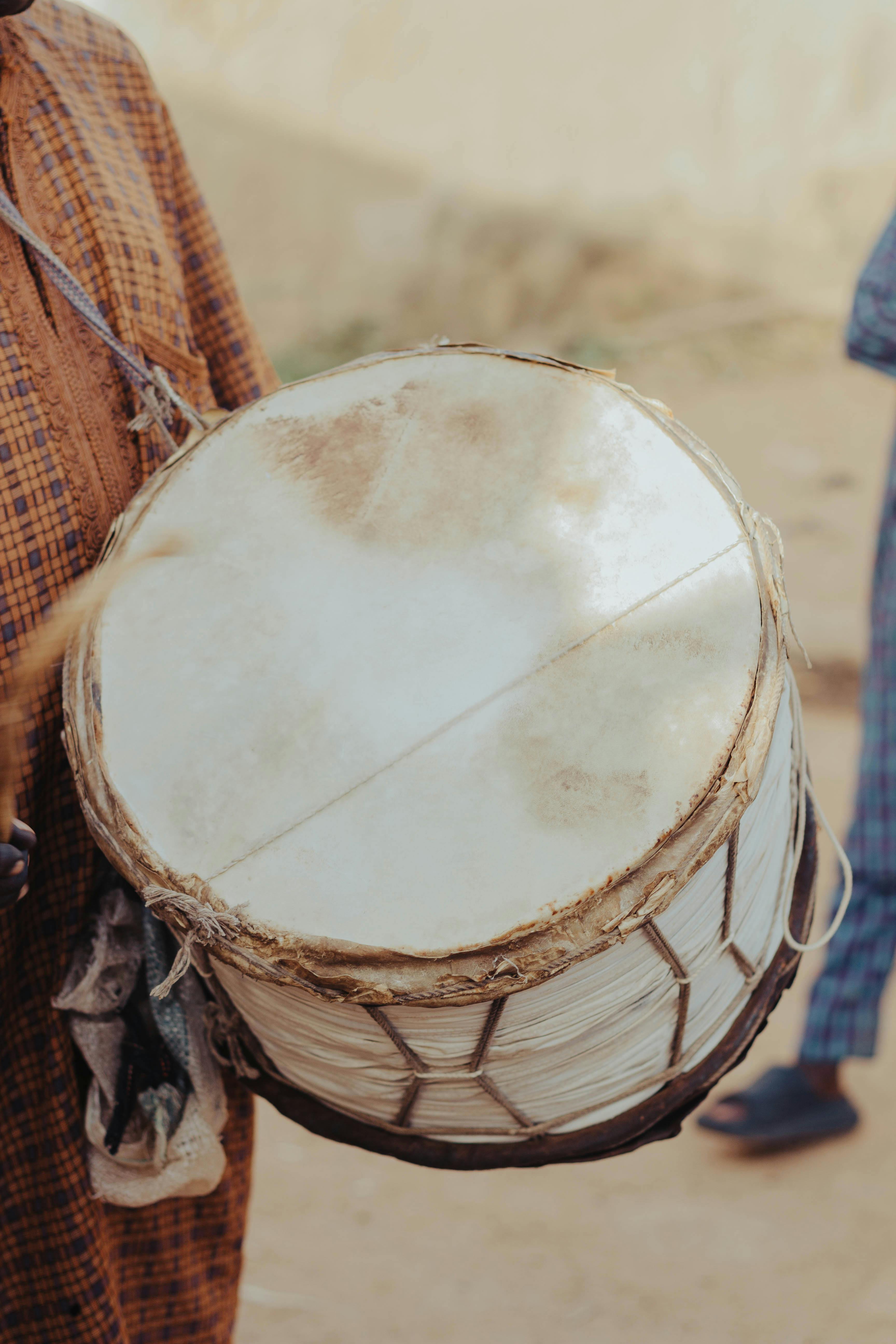
Photo credit: MK Photos / Pexels
But how do drums create their beautiful sound? Traditionally, animal skin (usually goatskin or buffalo hide) is stretched tightly over a wooden frame. When the skin is struck, it vibrates and pushes the air around it. This creates sound waves, which enter our ears and is interpreted by our brain as drumbeats. In general, the tighter the skin is pulled over the wooden frame, the higher pitched the drum sounds will be.
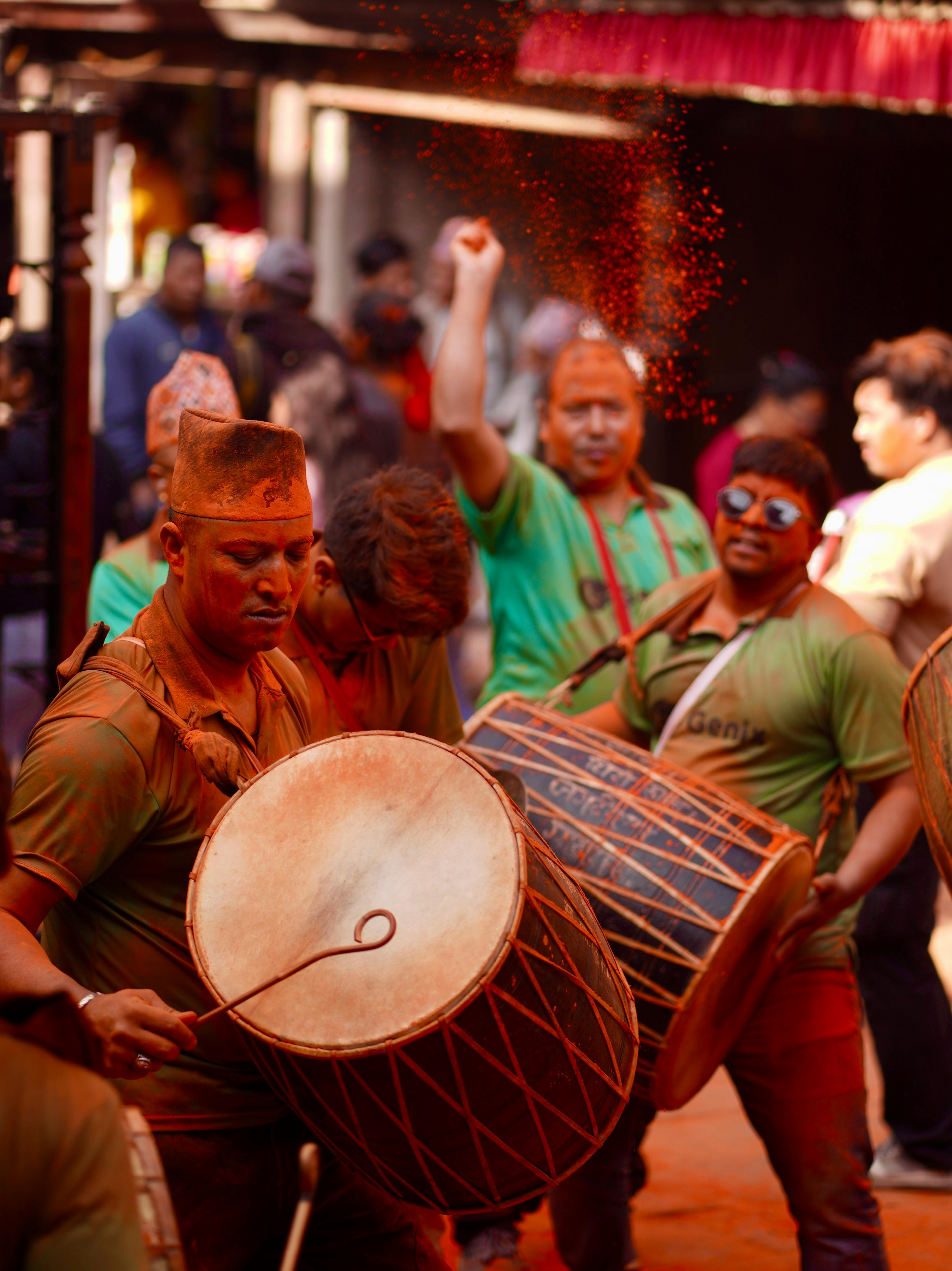
Photo credit: Dinesh Kandel / Pexels
The size of the drum matters too! Bigger drums such as the rebana produce deeper and lower sounds, while smaller drums such as the kompang produce higher and brighter sounds. This is because a bigger drum has a larger volume of air, which will produce slower, wider, and lower sound waves – which our brain registers as a lower pitch.
Time to Create Your Own Beat!
Now that we’ve learnt about the science behind drums, let’s make more sound magic by creating our own drums! Which material and size of the drum makes the nicest sounding drumbeats? Let’s find out together!

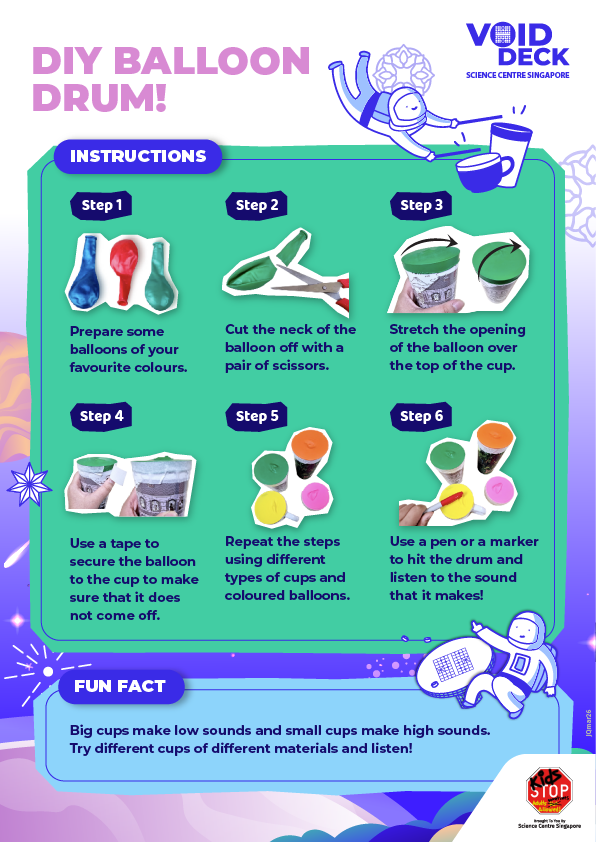
Click here to download a printable guide.
Written by Vanessa Lee & Fatin Afiqah Binte Musa