
DIY: Bumble Bee Pollinator
Perfect for parents with young children: craft out a bumble bee that can 'pollinate' flowers!
As we celebrate World Environment Day on 5 June, this year’s theme "Inspired by Nature. For Climate. For Our Future." reminds us to look closely at the tiny forces holding our ecosystems together. Some keystone species among them are bees and other essential pollinators.
While World Bee Day officially took place on 20 May (honouring the pioneering 18th-century Slovenian beekeeper Anton Janša), the critical conversation around protecting these insects is a cornerstone of global environmental action. Bees and other pollinators are vital for maintaining biodiversity. In fact, they pollinate about one-third of the food we eat, including fruits, vegetables, nuts, and seeds.
However, our natural ecosystems face severe risks. Bee populations worldwide are experiencing steep declines due to threats like habitat loss, pesticide use, climate change, and diseases. Protecting them isn't just about saving a single species—it's about safeguarding the future of our planet's climate and biodiversity.
The future of bees in Singapore
Beyond international awareness days, Singapore has developed a growing ecosystem of companies and organisations dedicated to pollinator education and conservation. For instance, Bee Amazed Garden conducts immersive, family-friendly workshops to teach hive ecology, while The Sundowner invites urbanites onto their rooftop apiary to suit up and meet rescued honeybees. Meanwhile, conservation groups like Nutrinest pioneer humane bee relocation services, rescuing wild hives from urban spaces and rehoming them in community apiaries instead of letting them fall victim to pest extermination. These initiatives provide year-round opportunities for Singaporeans to step into the world of urban apiculture (beekeeping) and play an active role in urban conservation.
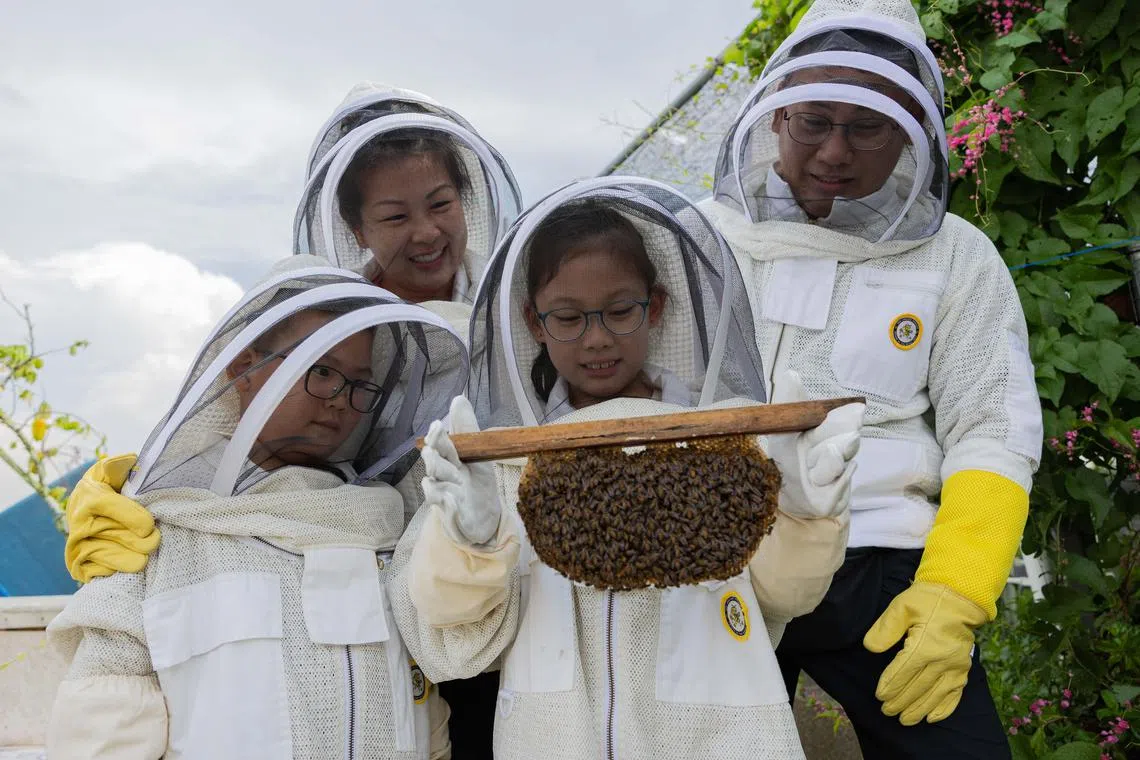
Photo credits: The Straits Times (opens in new tab)
Coexisting with nature requires us to move past passive awareness and take active steps as responsible citizens. We can support our local biodiversity by volunteering with native bee rescue operations, choosing chemical-free gardening methods, or even planting bee-friendly flora like jasmine and wild basil on our rooftop and community gardens. By advocating for habitat preservation and understanding the behaviors of Singapore's native bee and pollinator species, we ensure our "City in Nature" remains a sanctuary. Protecting these tiny, industrious ecosystems isn't just a nod to conservation, it is an investment in our own sustainable food security and ecological balance for generations to come.
Written by Low Jia Wen
Edited by Ang Shi Min
DIY Activity for Parents with Young Children:


References
Why bees are critical for achieving sustainable development - PMC (opens in new tab)
The Diverse Types of Bees in Singapore and Their Roles | SG (opens in new tab)
The bees of Singapore (Hymenoptera: Apoidea: Anthophila) (opens in new tab)