
Singapore’s weird, wild and wonderful shore life
Sometimes nature is stranger—and more wonderful—than fiction.
Due to our tropical location, Singapore supports diverse marine habitats capable of hosting a wide variety of intertidal wildlife. Our warm waters and sheltered coasts are suitable for key habitats like mangroves, seagrass and coral.
This article introduces just a tiny fraction of the amazing creatures found on Singapore’s shores, showcasing the stranger and more beautiful representatives from the major marine animal groups.
Cnidaria
Coral, sea anemones and jellyfish are all cnidarians. Cnidaria are a group of organisms with stinging cells that shoot out tiny harpoons, mainly used for catching prey or as defence against threats.
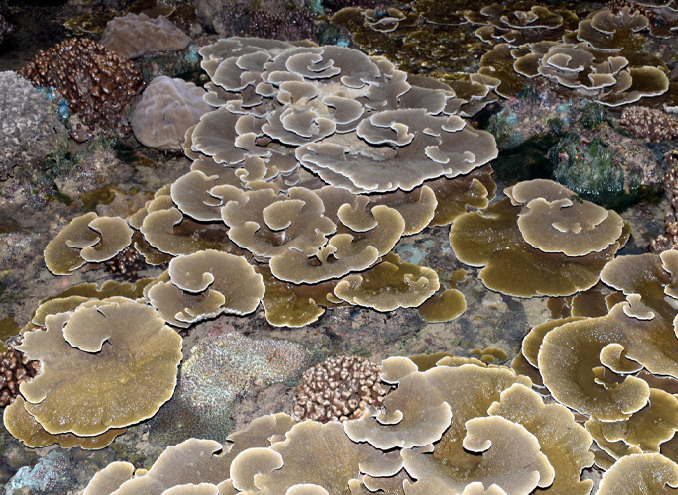
A majestic view of plate-like coral at Kusu Island. These hard corals (Scleractinia) form stone-like structures. Photo credit: Loh Kok Sheng
Clams (Bivalvia)
Clams have two shells, e.g. cockles, oysters and scallops. Some live buried in the sand, others attach themselves to rock, and some can even swim.
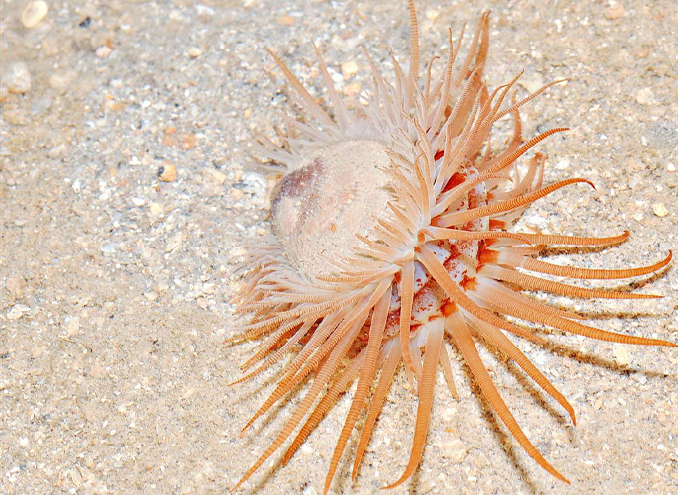
A file clam (Limidae) with its bizarre collection of tentacles, found at Sisters Island. Some file clams can snap their shells together, pushing water in one direction while propelling themselves in the opposite direction. Photo credit: Loh Kok Sheng
Gastropoda
Snails and slugs are a diverse group of organisms found in a wide variety of habitats. Snails are gastropods with a single shell, while slugs do not have a visible shell. Nudibranchs are some of the most beautiful slugs found in the oceans.
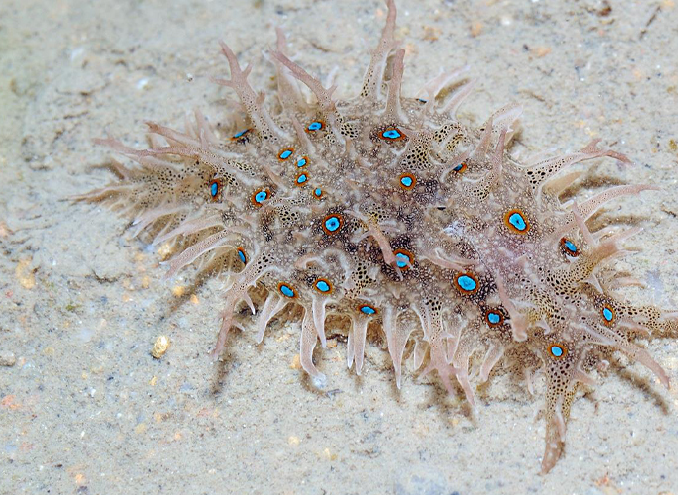
A sea hare (Anaspidea) found at Pasir Ris beach. Sea hares are some of the largest and strangest-looking creatures found on our shores. They do have shells, though reduced and hidden under their skin. Photo credit: Loh Kok Sheng
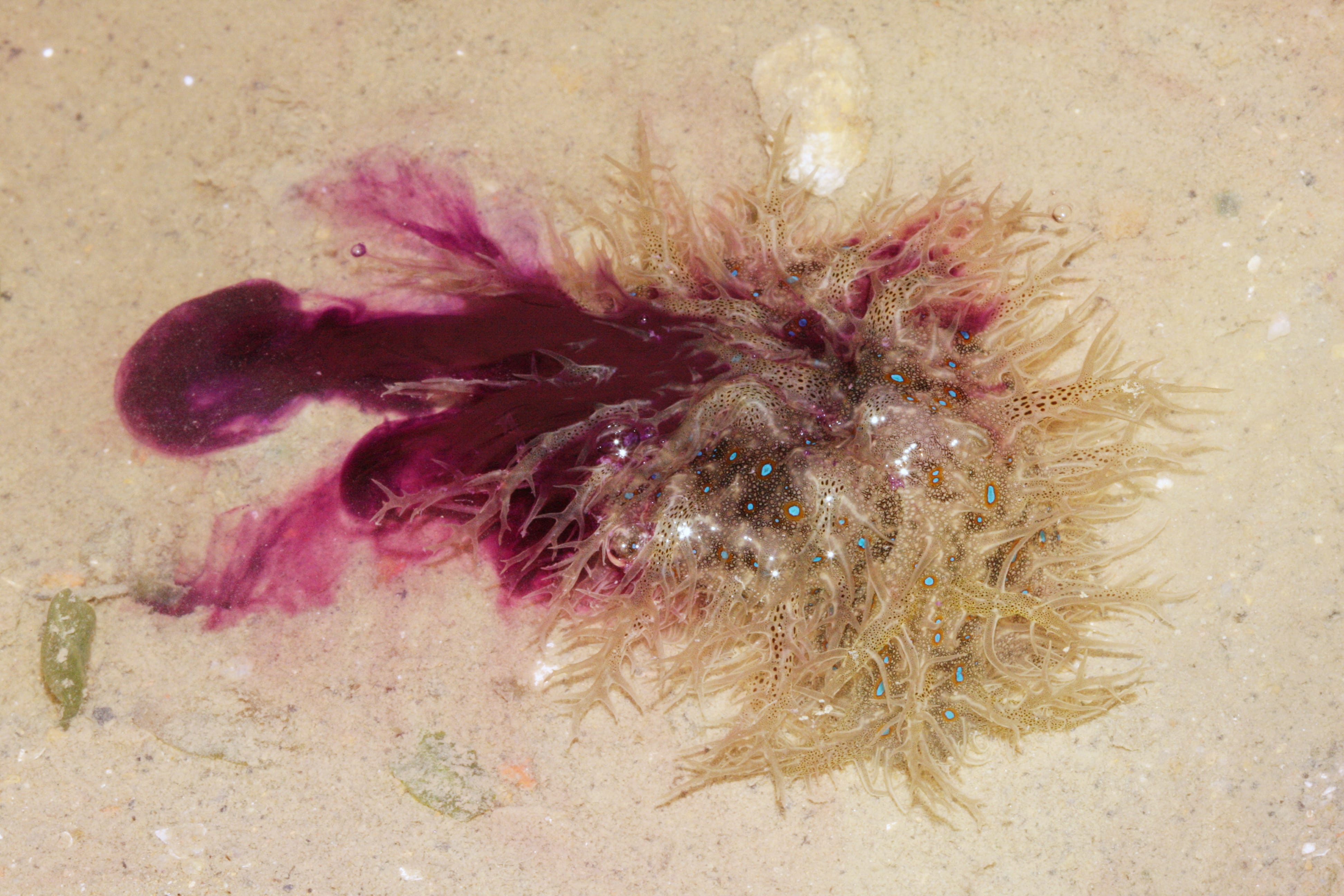
They can also release a purple dye to deter predators when threatened or irritated. Photo credit: James Koh
Decapoda
Crustaceans, such as shrimp, prawns and crabs belong to a group of organisms called Decapoda, meaning ten (deca) legs (poda). However, they actually have more than ten appendages, used for feeding, gripping things, walking, and swimming.
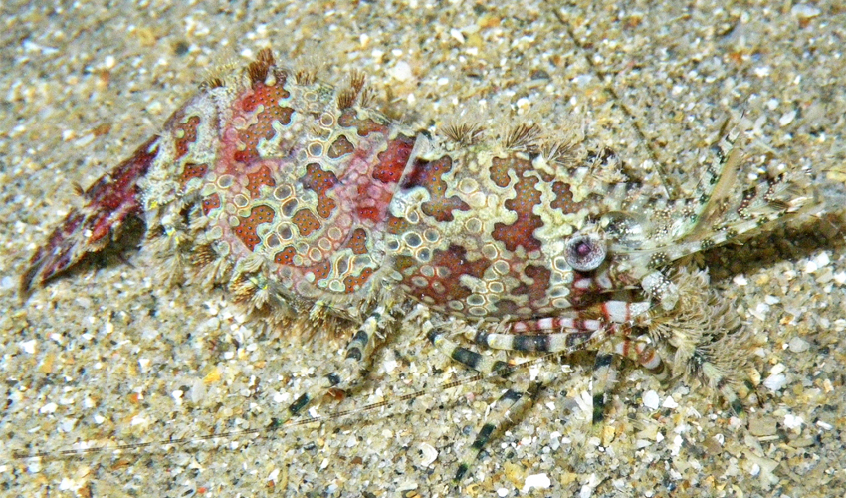
Saron shrimp (Hippolytidae) can be found at our mainland shores, as well as our southern islands and reefs. They are not very active and are difficult to spot from a distance with their camouflage. When examined up close, they are actually quite beautiful. Photo credit: Loh Kok Sheng
Echinodermata
Echinoderms, such as sea stars, feather stars, brittle stars, sea cucumbers, and sea urchins have radial symmetry, usually five-fold.
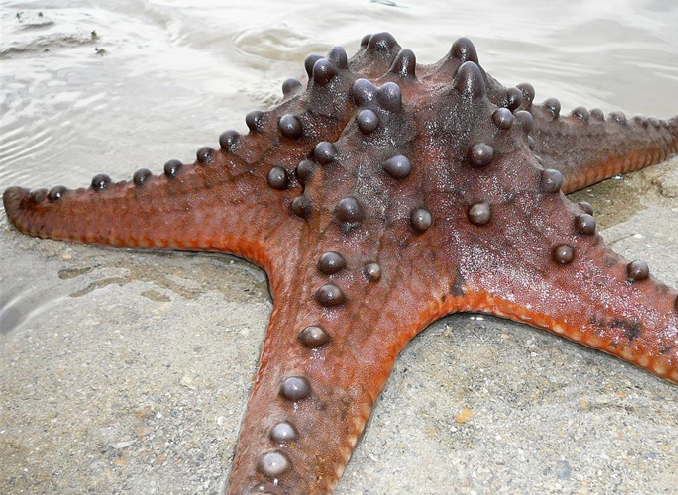
A knobbly sea star (Protoreaster nodosus) on the beach at Pulau Semakau. Though large and scary-looking, they are not venomous. They eat a variety of things including algal films, detritus and sessile organisms like sponges and gastropods. Photo credit: Loh Kok Sheng
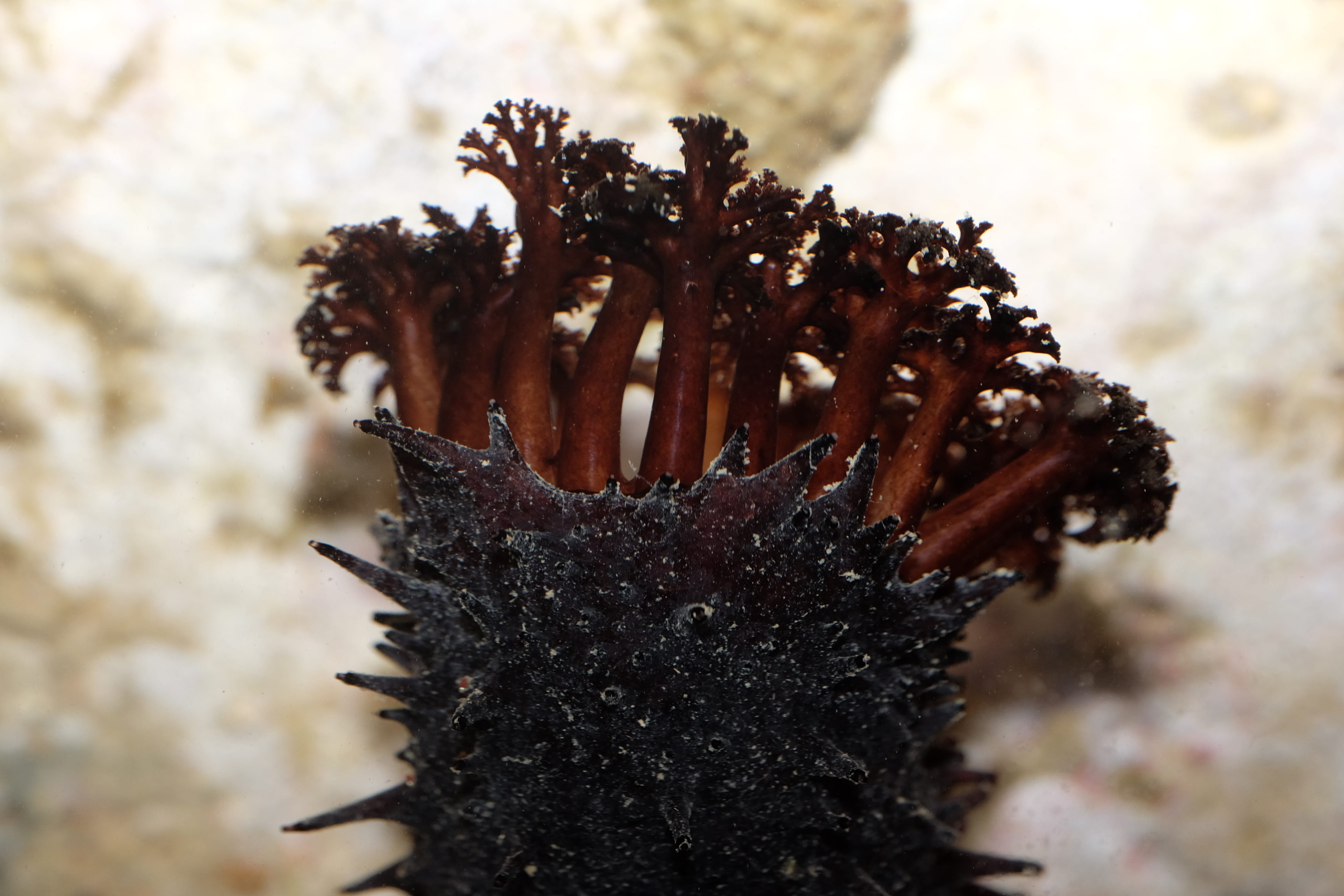
Sea cucumbers feed using their highly branched mouthparts that grab food particles into their mouths. Photo credit: James Koh
Cephalopoda
Squids, octopuses and cuttlefish are known for having tentacles, the ability to change colour and skin texture, and releasing ink as a defence mechanism. More often encountered as food, these creatures are actually very beautiful when alive.
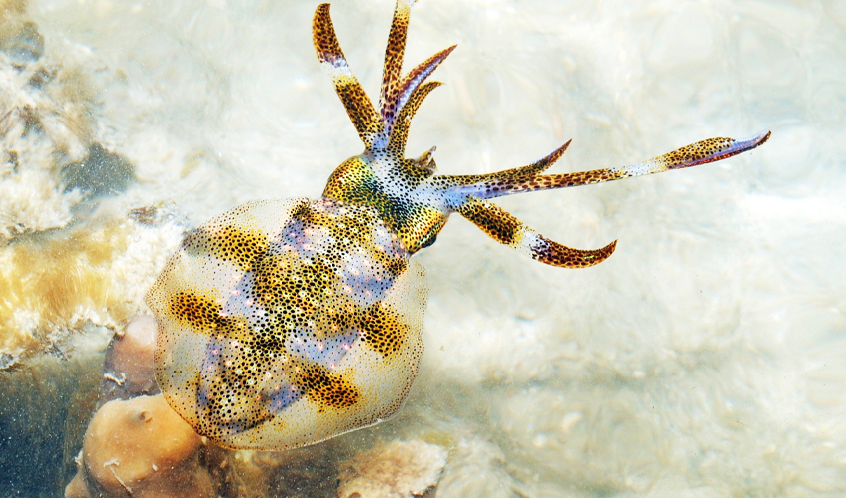
A bigfin reef squid (Sepioteuthis lessoniana) found at Terumbu Raya. Photo credit: Loh Kok Sheng
Fish
Fish are probably the most well-recognised of marine animals. Singapore is home to some very strange-looking fish!
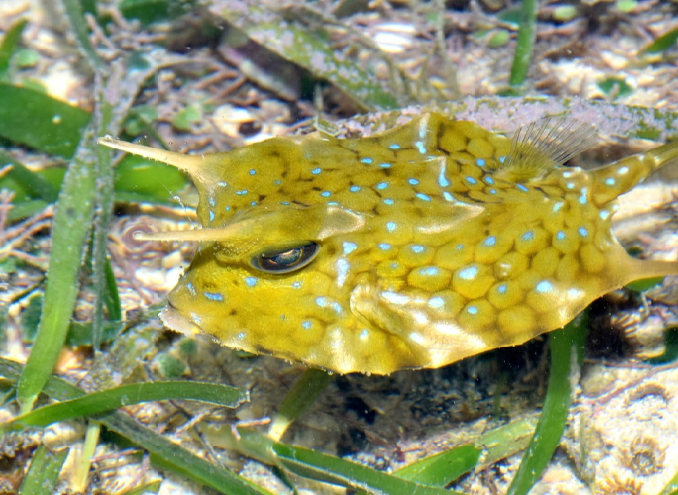
A boxfish (Ostraciidae) found at Cyrene Reef. This particular species has two long horns on its head, hence the name “Longhorn cowfish.” Photo credit: Loh Kok Sheng
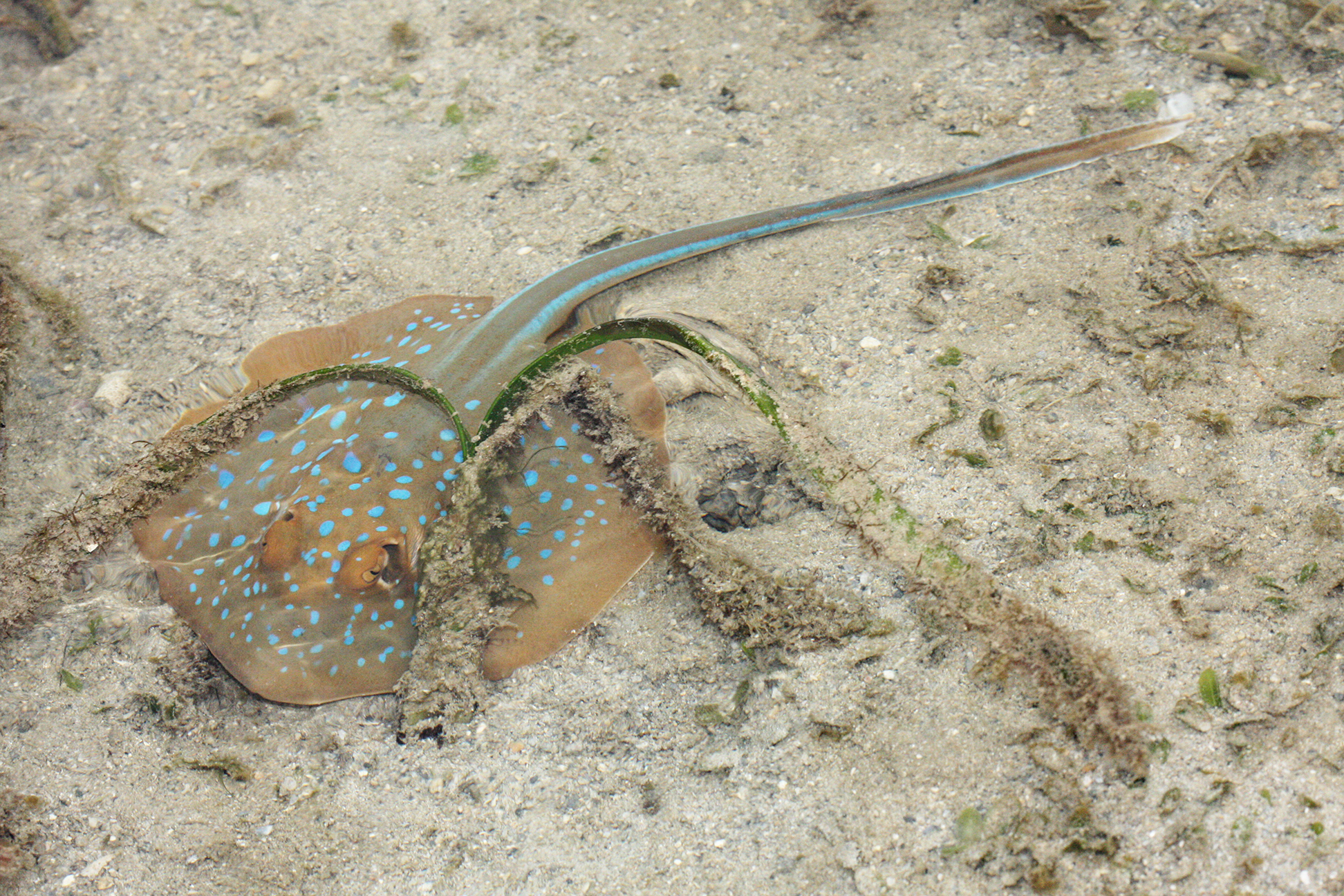
Blue-spotted fantail rays (Taeniura lymma) are shy fish that hide just under the sand. Be careful not to step on them, as they will defend themselves with their venomous sting. Photo credit: James Koh
Want to discover more of Singapore’s shore life?
Singapore’s marine wildlife is closer than you might think, but these fragile ecosystems are increasingly vulnerable. As a global shipping hub, with around 25% of our land area reclaimed, every action we take can make a difference. When visiting our shores, remember to treat them as wildlife habitats: observe responsibly, and leave only your footprints behind.
Prefer to explore Singapore’s marine life without getting your feet wet? Head to ONE Ocean: Every Action Ripples (opens in new tab) at Science Centre Singapore and step into the fascinating world beneath our waters.
At Tides of the Red Dot, discover the incredible marine life found along Singapore’s shores and uncover the stories behind these unique ecosystems. Get an up-close look at real specimens from the Lee Kong Chian Natural History Museum and see just how weird, wild and wonderful our local marine life can be.
Ready to meet Singapore’s shore life up close? Discover the weird, wild and wonderful marine species of our shores at ONE Ocean: Every Action Ripples and uncover the stories beneath our waters.