
Ecosystems of shipwrecks
Discover how depth, time and temperature transform shipwrecks into thriving underwater ecosystems, as well as the impact they have on marine life.
What begins as a ship made of metal or wood can eventually become an underwater ecosystem full of biodiversity. This process is influenced by several environmental factors such as the depth, time and temperature.
1. How depth affects shipwrecks
Depth plays a big role in how a wreck interacts with the ocean environment.
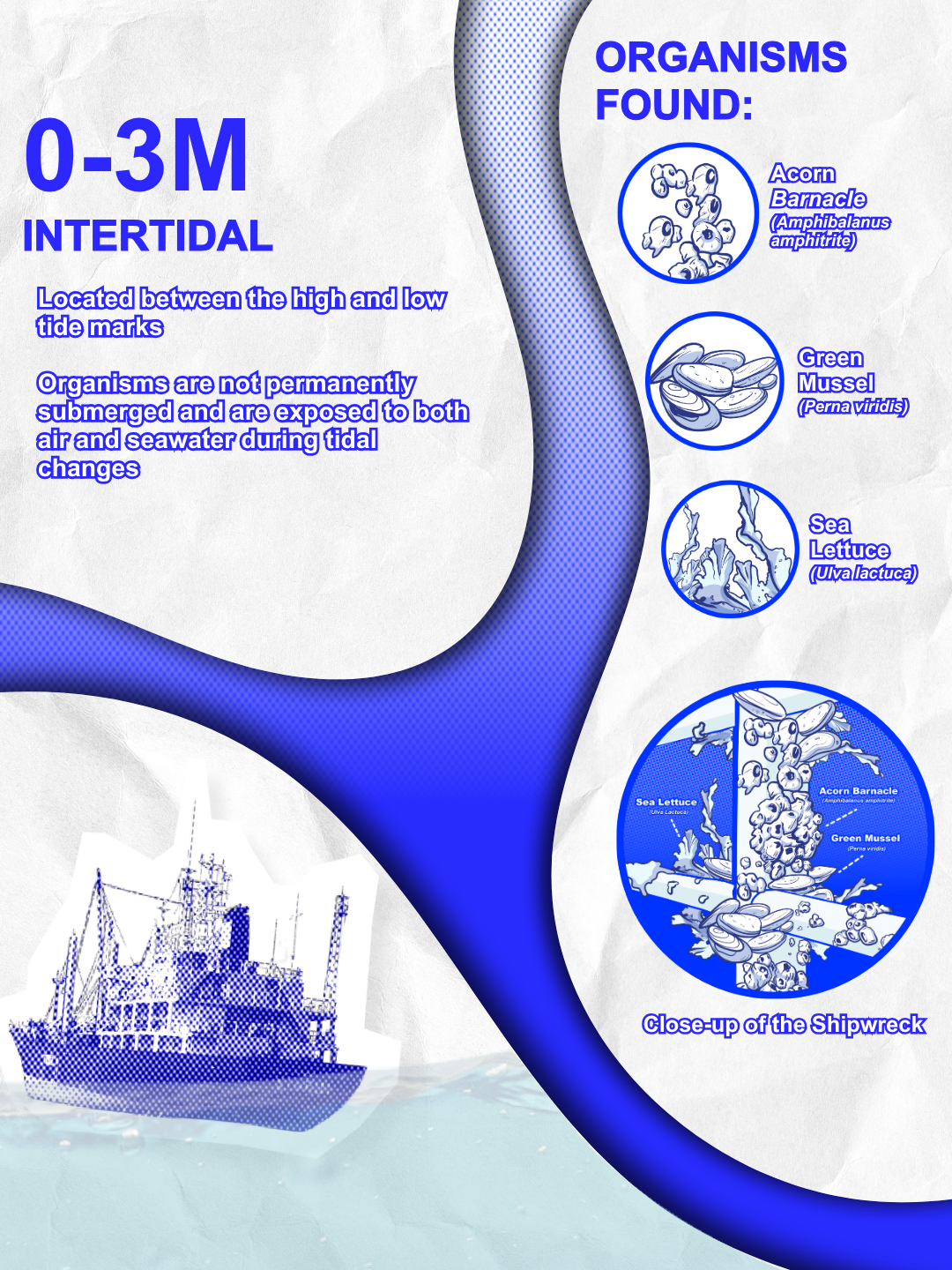
The 0–3 metre range, also known as the intertidal zone, is the coastal area between the high and low tide marks. Organisms living in this zone are not permanently submerged, as they are exposed to both air and seawater during the tidal cycle. Common organisms found in this zone include barnacles and mussels, which are well adapted to these challenging conditions.
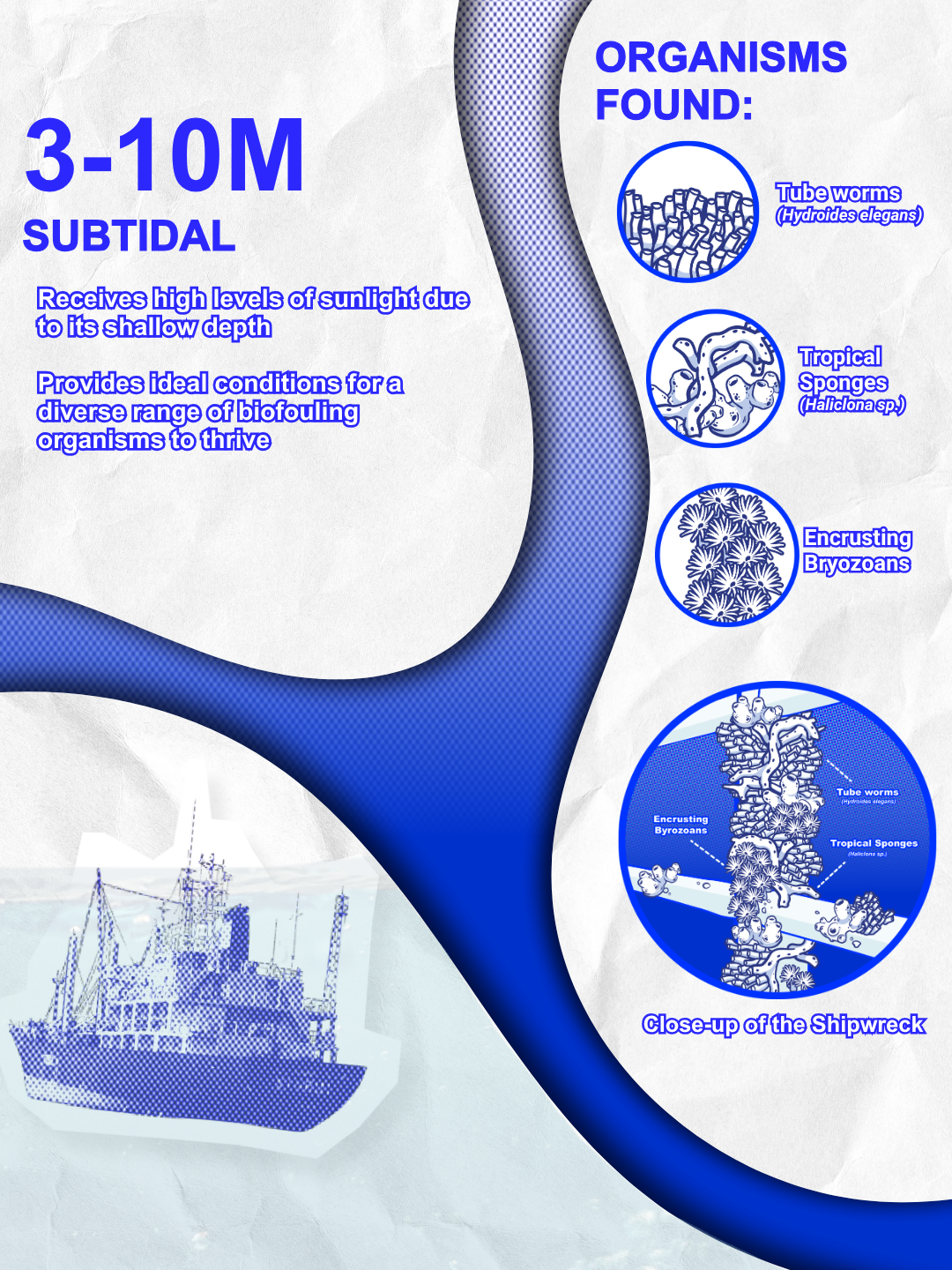
Below the intertidal zone lies the 3–10 metre range, which forms part of the shallow subtidal zone. In this region, sunlight penetrates the water effectively, creating favourable conditions for biofouling organisms to thrive.
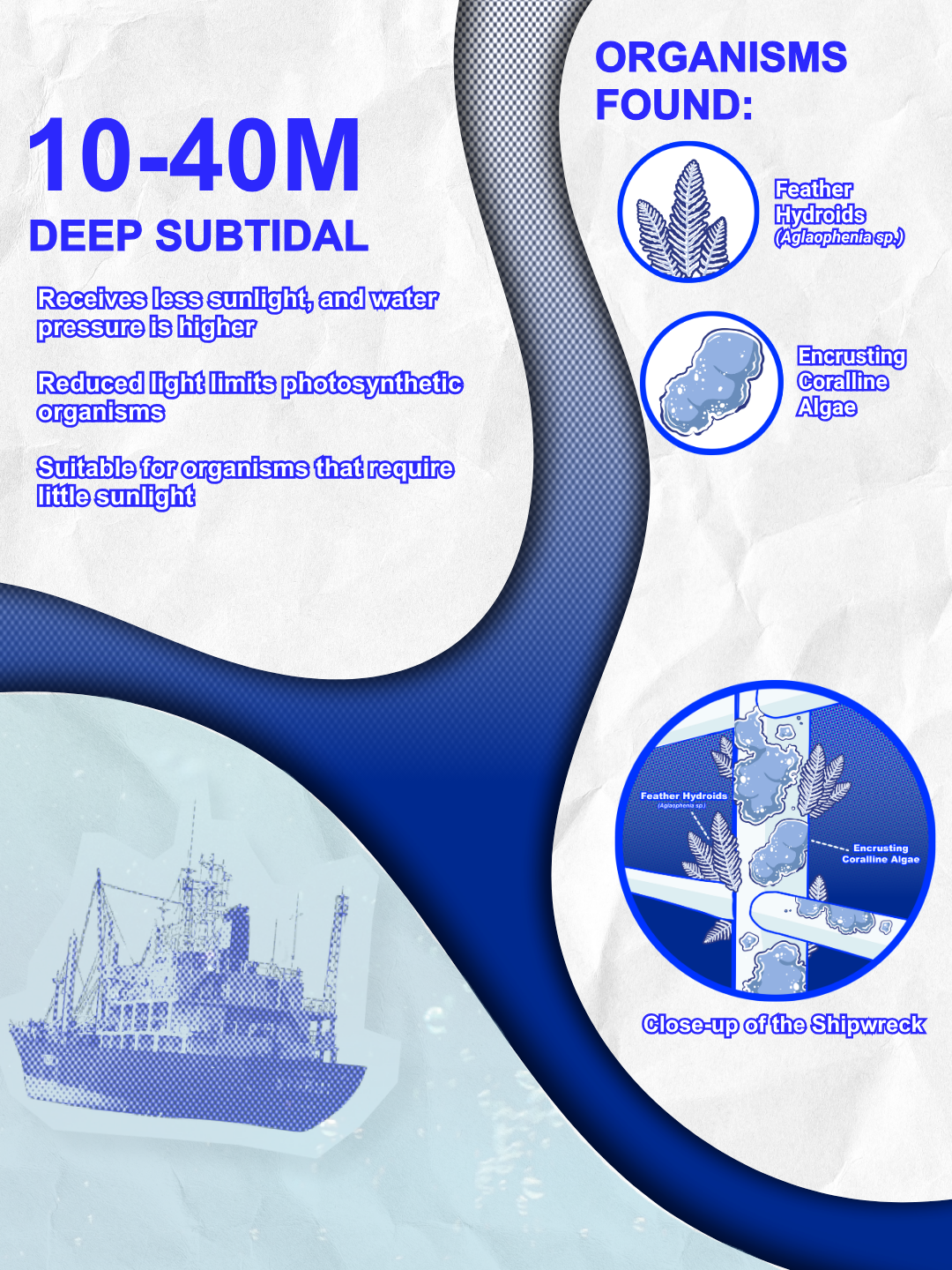
Further down, the 10–40 metre range is located in the deeper subtidal zone, where sunlight becomes less intense and water pressure increases. The reduced light limits the growth of organisms that depend on photosynthesis, while creating suitable conditions for species that require little sunlight. Organisms such as Encrusting Coraline Algae thrive in this environment by filter-feeding on microscopic particles suspended in the water, allowing them to survive without relying on sunlight.
2. How time affects shipwrecks
Within minutes of the shipwreck, larger animals like fish sometimes appear. Small fishes hide in the structure’s cracks and crevices, while large sharks glide around it.
In weeks, after the ship sinks to the bottom, microorganisms and algae colonise the metal or wood to form a slimy layer of biofilm. This attracts the planktonic larvae of bottom-dwelling fauna like mollusks such as mussels to settle on the slimy layer, eventually growing into large reef-like clusters.
In years, sessile invertebrates like sponges and soft corals attach and grow on to the wreckage.
There will also be microbial and chemical decay where metals like iron and steel hulls undergo rapid chemical corrosion. Microbes such as the iron-eating bacteria Halomonas titanicae aggressively consume the hull, creating "rusticles".
In decades, the site then matures into an artificial reef, often displaying a biodiversity and species richness that rivals or enhances natural coral ecosystems.
Lastly, in centuries, heavy wreckage is gradually buried by shifting sand.
3. How temperature affects shipwrecks
Water temperature directly controls the preservation and degradation of a shipwreck. Warm water accelerates metal corrosion, fuels chemical breakdown, and attracts wood-eating marine borers like shipworms.
However, in cold, deep, or oxygen-deprived environments like the deep ocean, many of these processes evade as bacterial growth and chemical reactions slow down, acting as a natural preservative. Without oxygen or wood-eating marine organisms, wood and cargo can remain almost perfectly preserved. While in colder water, bacterial growth and chemical reactions slow down, acting as a natural preservative.
Effects of shipwrecks
However, despite their biological value, shipwrecks can also threaten underwater life as they are toxic and can leak heavy metals and oil into the marine ecosystems, altering or destroying natural habitats, causing pollution and spreading invasive species such as the orange cup coral.
Even so, shipwrecks still serve as vital artificial reefs that boost underwater biodiversity and preserve invaluable historical data.