
Oceans in pop culture
Charismatic ocean species and forgotten fauna: how pop culture can impact conservation on ocean life through positive and negative representations
Have you ever feared a shark attack, even in shallow waters? Or maybe been too scared to swim, terrified at the thought of encountering a great white?
Well, you aren’t alone. Galeophobia is a common fear or anxiety towards possible shark attacks. These fears may have little to do with scientific evidence, and more with a misunderstanding, shaped by popular mainstream culture.
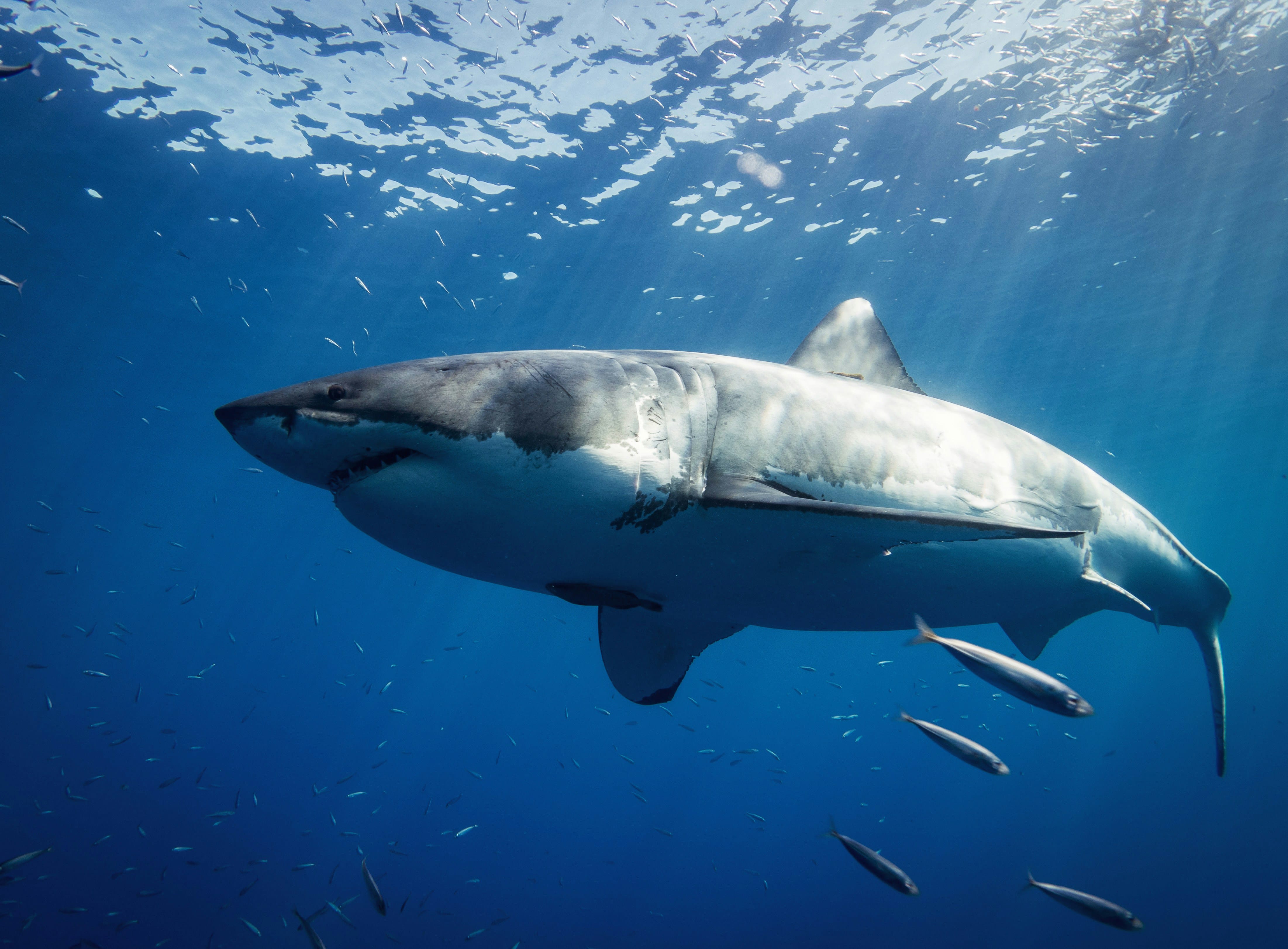
Photo of a great white shark. Photo by Gerald Schömbs (opens in new tab) on Unsplash (opens in new tab)
The film Jaws (1975), which depicts a fatal shark attack, popularised the notion of sharks being vicious and predatory towards humans. The cultural success of the film, its subsequent inspirations, and sensationalised media dominance of attacks all socially reinforced the "Jaws effect" (opens in new tab) - a global and disproportionate fear of sharks.
Being mindful of potential dangers can help keep us safe; however, shark attacks are statistically unlikely, since humans are not part of sharks’ natural prey. Notably, the number of sharks killed (opens in new tab) by humans far exceeds the number of human fatalities caused by sharks. This imbalance has contributed to wider, negative, long-lasting consequences for shark populations that have caused damage to our ecosystem.
Shark populations have been depleted significantly worldwide due to shark culling, finning, and incorrect overfishing practices. Culling, the deliberate killing of sharks in response to shark attacks, is not only unethical, but an extreme reaction disproportionate to shark related injuries.
Losing shark species can tip the ecological balance, negatively impacting the equilibrium of predator-prey interactions. Additionally, it can lead to the potential destruction of carbon-storing underwater habitats.
Critter charisma!
Categorising marine life into broad categories of good and evil, or heroic and villainous dramatizations can create a societal bias. This pushes the unfavoured creatures into a category known as ‘non-charismatic species’, at the blunt end of social, cultural, and environmental conservation efforts.
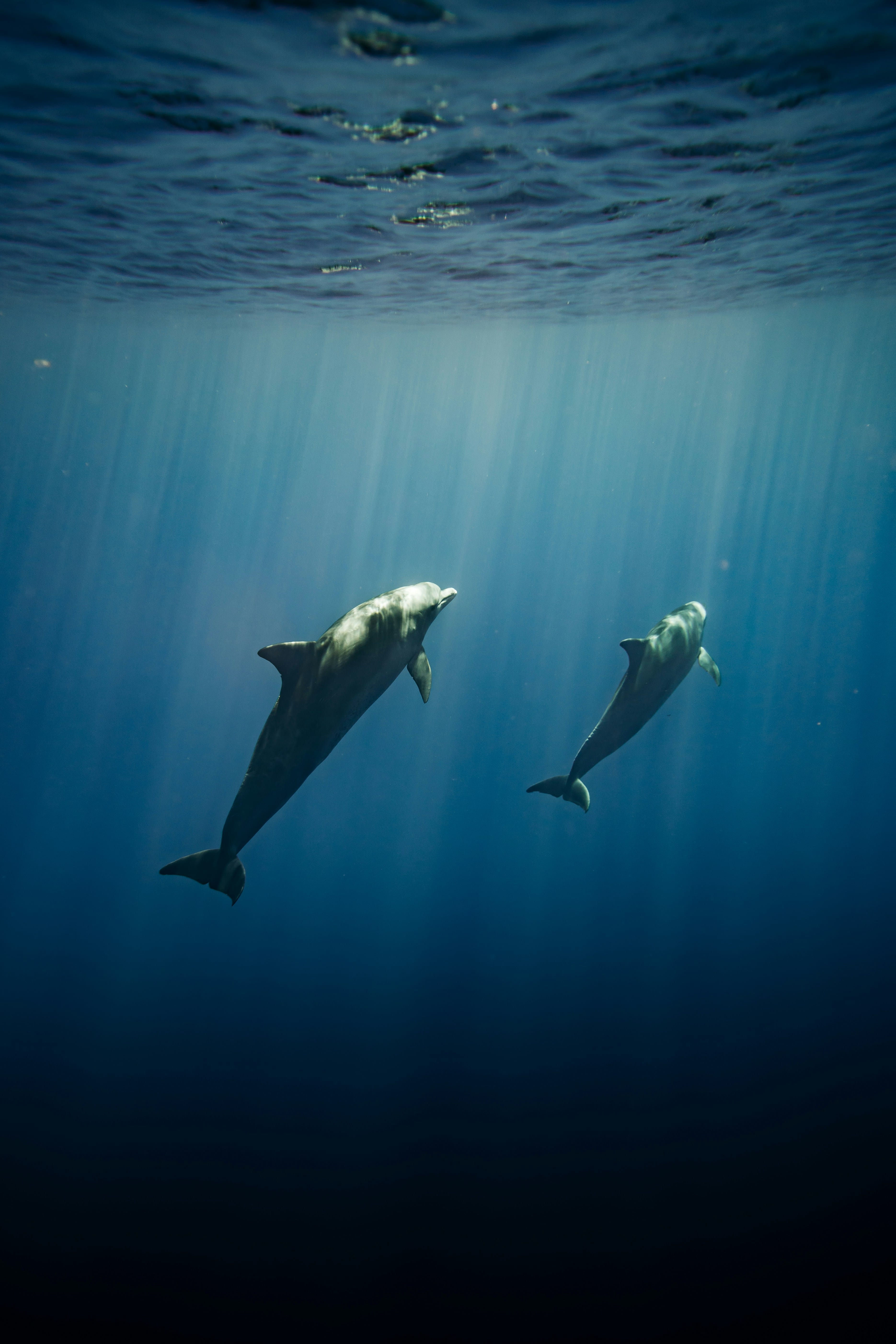
Photo by Maria Bourgali (opens in new tab) on Unsplash (opens in new tab)
In contrast, charismatic species, like turtles, seals, and dolphins get all the love. In films, these marine animals are portrayed endearingly, often as protagonists or reflecting admirable personalities. Finding Nemo (2003), The Little Mermaid (1989), and Penguins of Madagascar (2014) are all household names that reflect these tropes.
Our shores
It goes beyond animals, impacting our knowledge and view of marine and coastal habitats.
Locally, one of Singapore’s most biodiverse hotspots is our coastal mangroves. These forests once covered 13 percent of the island, but only 0.5 percent remain.
Most notably, on the mainland of Singapore, the largest and most prominent current mangrove site, Sungei Buloh Wetland Reserve, covers 130 hectares. Mangrove habitats provide critical nursing environments for many juvenile marine species, making them an integral part of healthy coastal and ocean ecosystems.
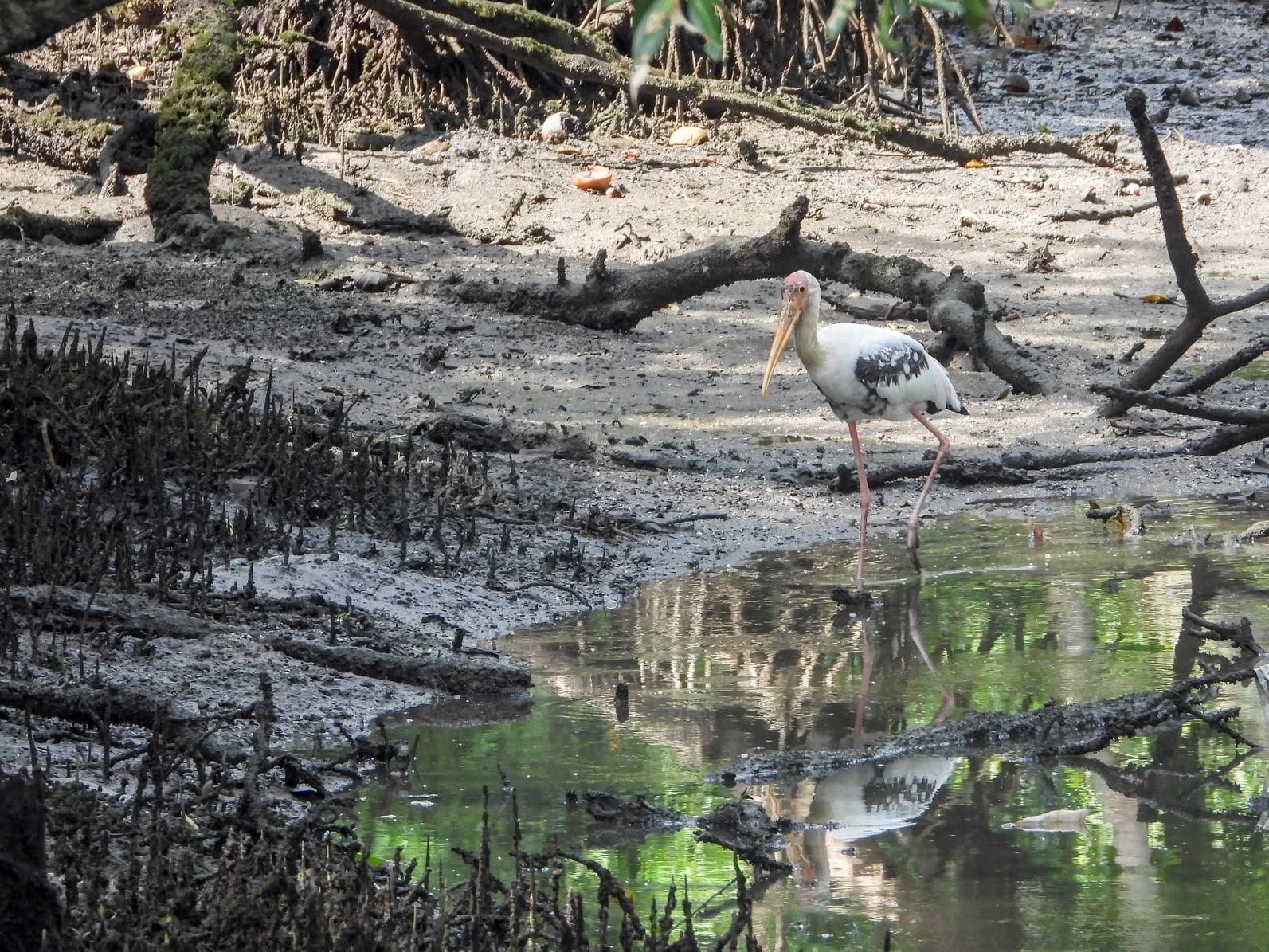
Photograph of a painted stork at Sungei Buloh Wetland Reserve. Image credit: Lim Meng Hwee
Blue Planet II (2017) and Chasing Coral (2017) are amongst some of the most popular marine documentaries, nevertheless without significant mention of mangroves.
Due to their lack of media exposure, and lower visual appeal, mangrove forests continue to be overlooked within marine habitats.
While the colourful beauty and diversity of coral reefs are emphasized across documentaries, advertisements, and educational content, mangroves have fallen to the sideline of conservation efforts.
The media often prioritises visually striking environments that can be easily appreciated by audiences. In contrast, mangroves are commonly perceived as muddy and inaccessible landscapes; characterized by gangly roots, strong odours and limited leisure and tourism opportunities. As a consequence, they are often overlooked despite ecological importance
What's next for our oceans?
Public awareness is frequently directed towards charismatic ecosystems and species.
In Singapore, this has contributed to mangroves receiving less recognition in comparison to broader conservation efforts; despite being so integral to our local community.
That’s not to say that the efforts towards protection of charismatic species like coral reefs should be minimised, since any and all efforts still help contribute to a healthy ecosystem. Instead, acknowledging existing practices, and striving for equal attention to the overlooked species should be the aim.
Awareness can begin with critically engaging with the media consumed, and the narratives presented. The next time you see a negative representation pushed about a specific species, consider another perspective.
Stay connected and explore wildlife around you, and you might gain nuance that may be lacking on screen. While you should unwind with dramas and films, separate reality from fiction, and try not to let the echo chamber or negativity take away the empathy we should have for all creatures of the world.